Skene
- Team
- Johannes, John, Elliot
- Our Scope
- UI/UX design Product design Frontend development Branding
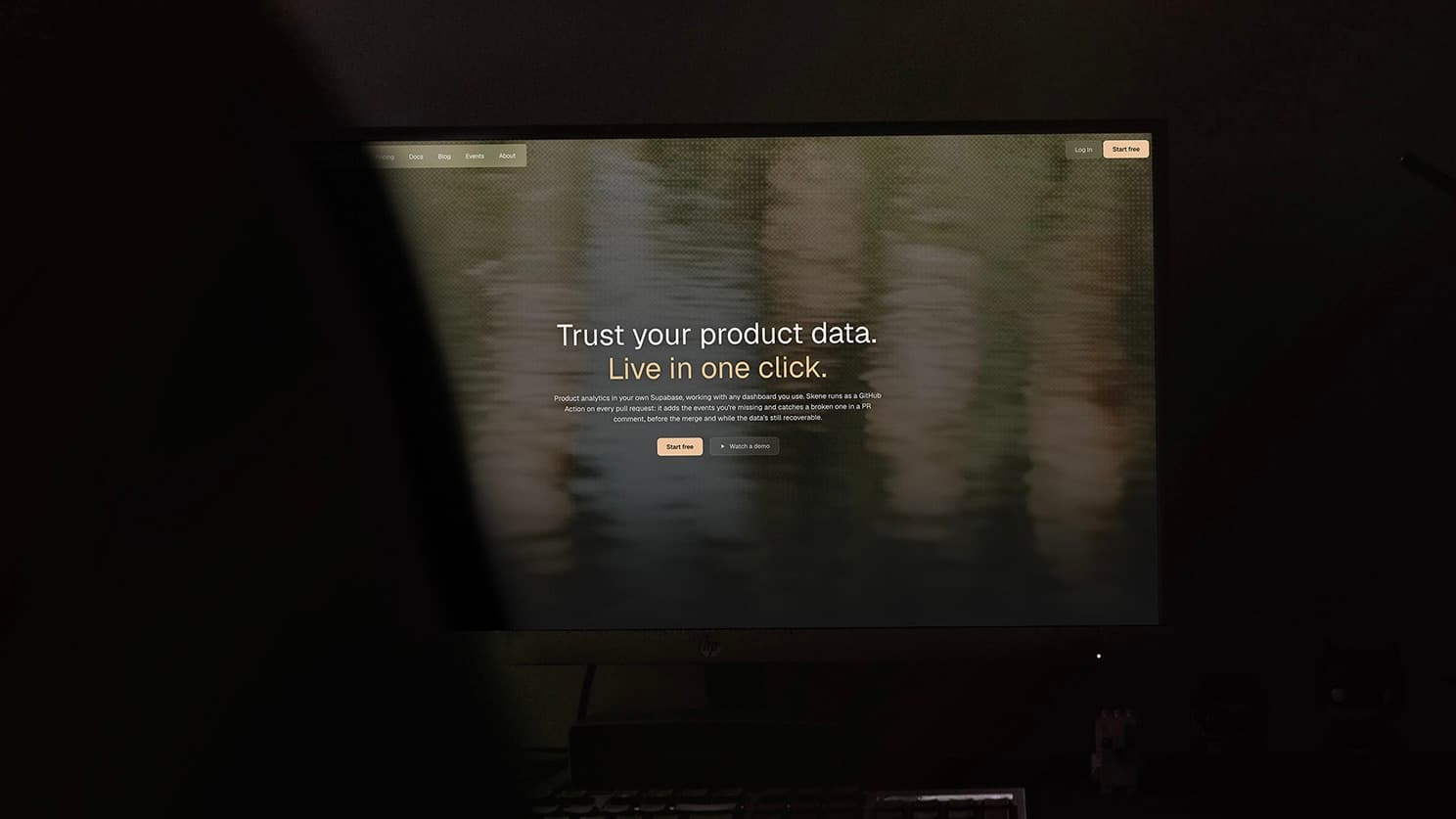
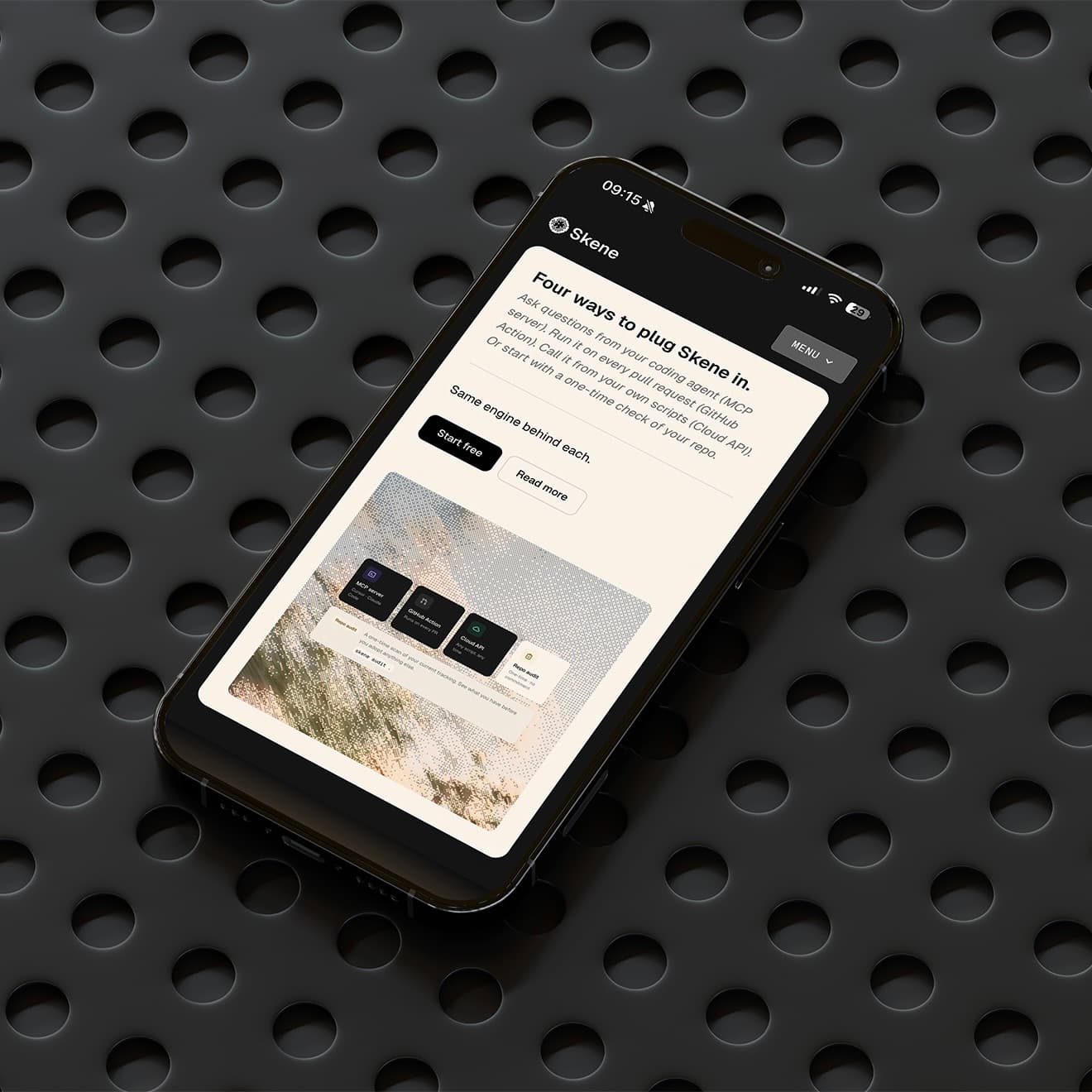
Skene approached us for a short sprint: redesign the landing page, refine the brand, improve onboarding, and add clarity to the product. We shipped it in a few weeks. After that, they signed an ongoing partnership. We joined their team as an embedded product and design function, helping shape a developer tool that analyses codebases, builds user journeys, and catches broken analytics before release.
How it started
Skene came to us at the end of 2025 with a clear, contained brief: a few weeks sprint to test how we work together. The scope was light on purpose. Redesign the landing page, tighten the brand, rethink the onboarding, and bring more clarity to the product experience. We shipped all of it within the sprint.
They liked the workflow. No layers, fast decisions, and the people they talked to were the same people doing the work. That led to an ongoing partnership where we became part of their team, joining weekly standups, having regular sessions, and working side by side on whatever the startup needed next.
What the product is
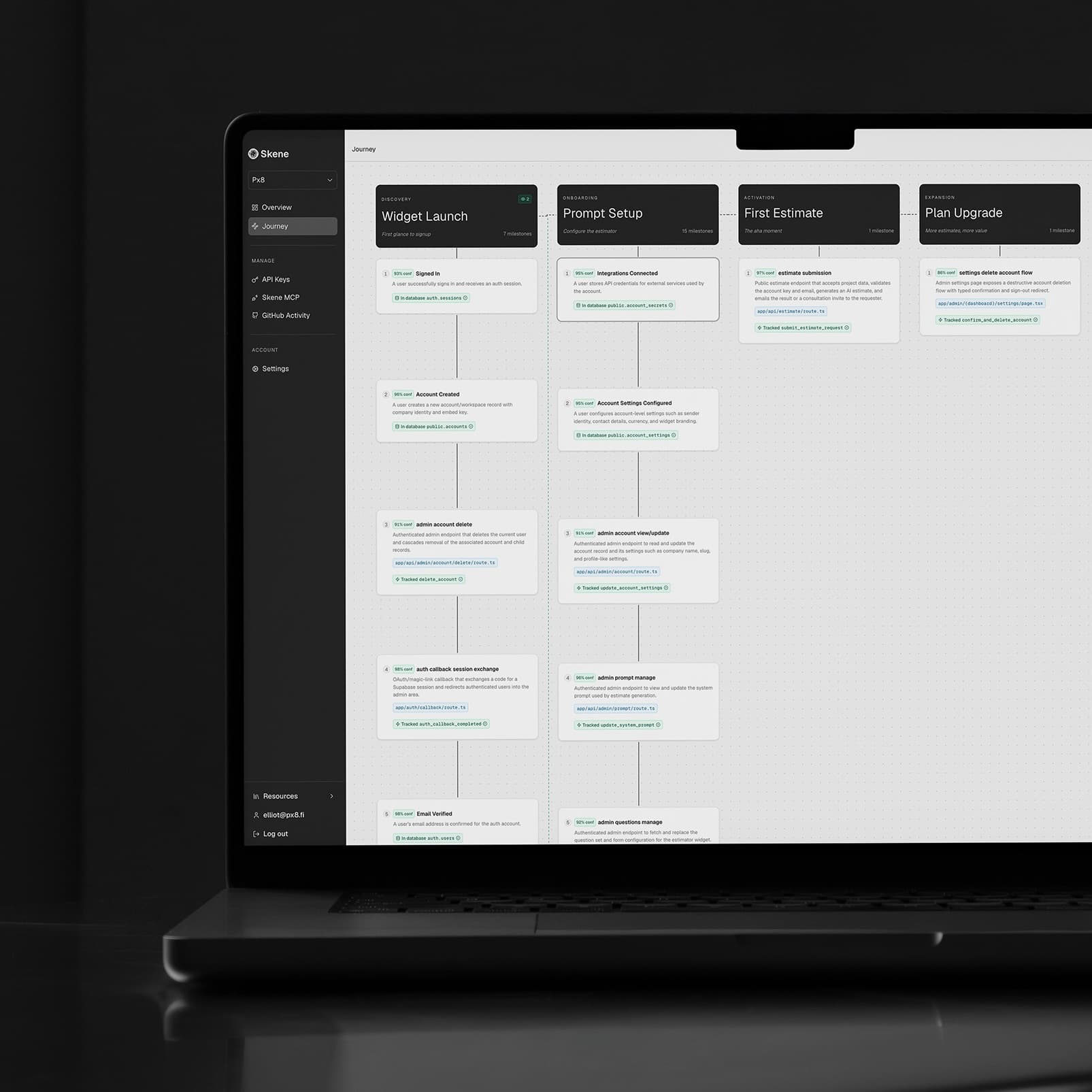
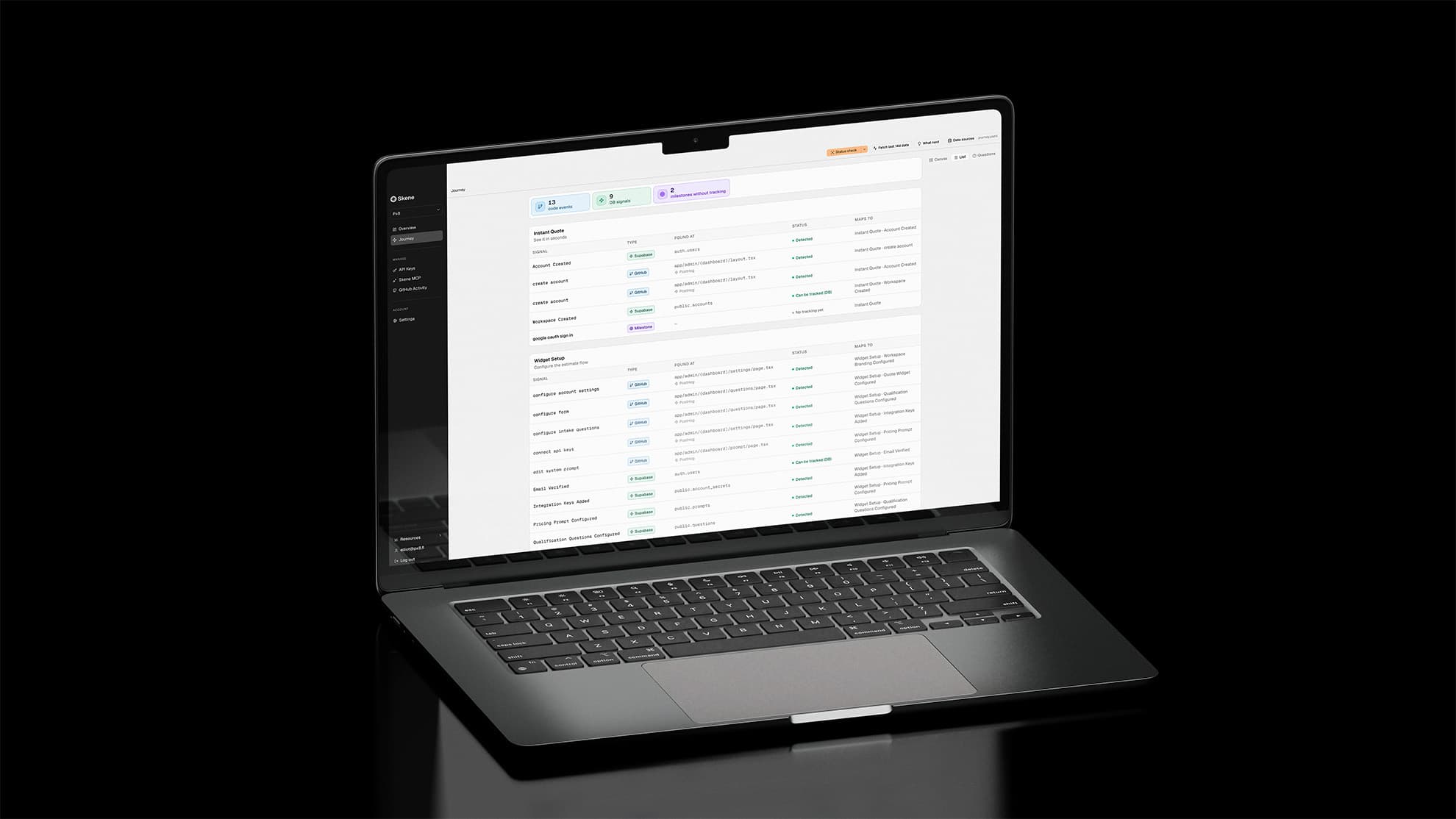
Skene analyses your codebase, builds user journeys from it, and makes sure your analytics tracking doesn't break before you release. It catches issues in the PR, before they reach production. The product started as a terminal-native tool and still has a TUI, but it's evolved beyond that into a broader developer workflow.
What we've built
Since going ongoing, we've worked across the full surface of what an early-stage startup needs:
- Product UI across terminal and web surfaces
- A marketing website built to position the product clearly
- A dashboard for managing journeys and tracking status
- A design system that works across all touchpoints
- A GitHub App integration
- User journeys and the tooling behind them
- UX refinement across the product
- Pitch decks and investor-facing communication
- Brand refinement, demo videos, and marketing assets
- Technical infrastructure decisions
It's everything from ideation through validation through build. We help Skene discover fast: interview users, prototype ideas, validate approaches, and ship the ones that stick.
How we work together
This is what an embedded partnership looks like in practice. We're not executing a fixed brief. We're part of the team, contributing wherever the startup needs to move fastest. Some weeks that's product design. Other weeks it's a pitch deck, a prototype for a new feature, or user interviews that shape the next sprint.
The engagement started as a low-commitment sprint with a clear outcome. It became an ongoing relationship because the model worked: director-level people, no overhead, and the ability to cover ground that would normally require multiple hires.